

Pristine NZ tidal estuary at golden hour with herons standing in calm water

Closing the loop on waste oil

Every litre of oil we collect is a litre that does not end up in a drain, a waterway, or a landfill. That is the starting point.

The circular economy in practice

Waste oil is a resource that has finished one job. It is not rubbish. It still has energy in it, and that energy can be put to work.

Most of the oil we collect heats horticultural glasshouses in the region. Those glasshouses grow tomatoes, cucumbers, and flowers for New Zealand tables. The oil from a Waikato workshop might be keeping an Auckland glasshouse warm the same week. That is a closed loop.

Additional volume is exported to the Pacific, where it is used in power generation. Every litre that stays out of a drain or a landfill is a litre doing useful work somewhere in the region.

AGB

Hover a stage to learn more

Interior of a New Zealand tomato glasshouse with rows of ripening fruit, warmed by recovered waste oil collected by AGB Solutions
The second life of your oil

Your workshop's used oil heats NZ glasshouses that grow tomatoes, cucumbers, and cut flowers.

Environmental protection

Used oil is one of the most damaging pollutants to enter New Zealand waterways. A single litre of oil can contaminate up to one million litres of water. Collection and correct disposal prevents that contamination from happening.

We operate across the upper North Island, and the region’s waterways, harbours, and coastal environments matter to us. Every collection we do is a direct environmental benefit.

Regulatory compliance

We operate in compliance with the Waste Minimisation Act 2008 and HSNOCOP 63, the New Zealand code of practice for the storage and handling of hazardous substances on land.

Our customers are also covered. Properly disposing of used oil through a registered collector means you meet your obligations under New Zealand environmental law. We can provide documentation for your records if required.
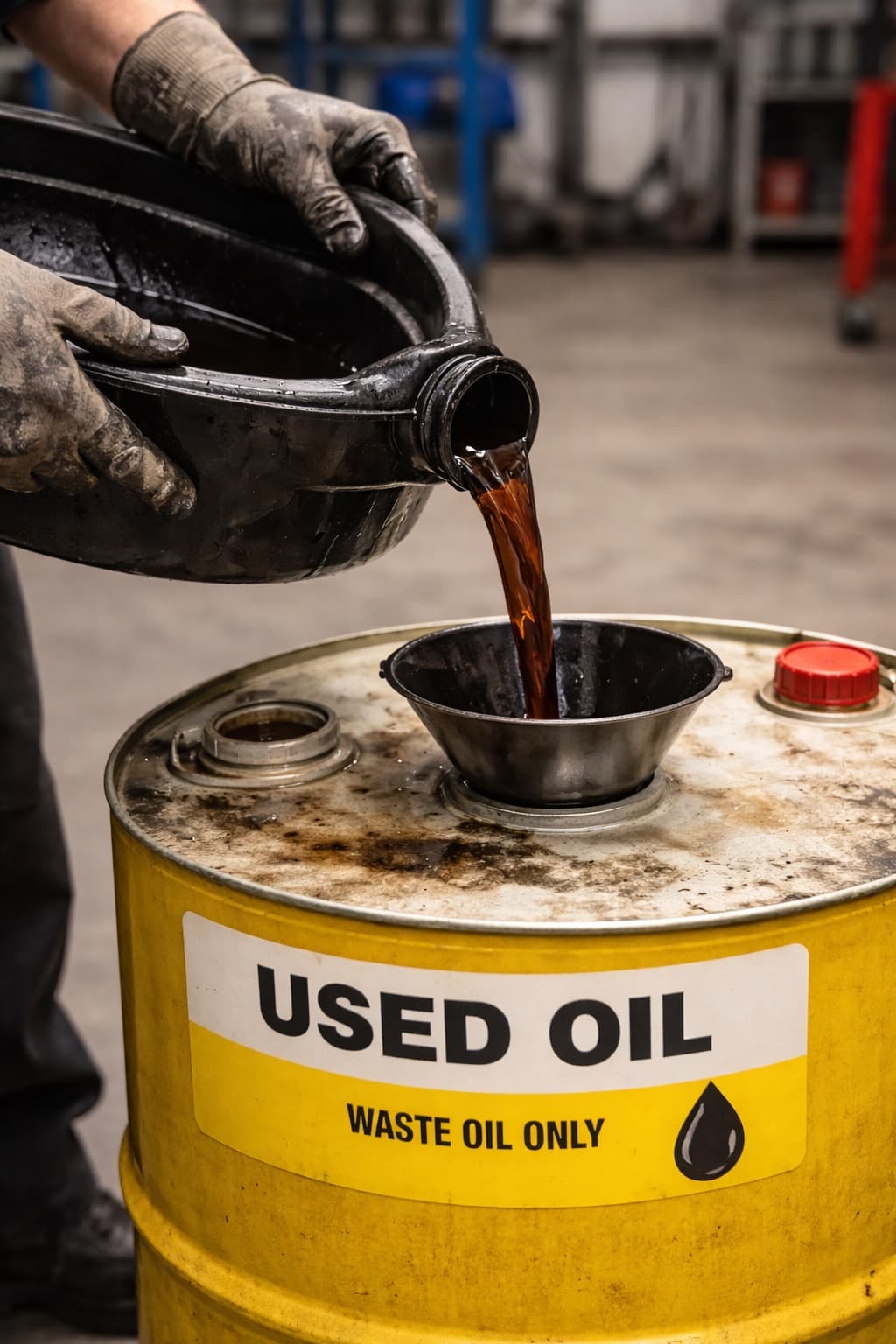
Used oil being poured from a workshop container into a sealed collection drum

What happens to your oil

When we collect oil from your site, here is where it goes.

We are not a re-refinery. We do not produce new lubricant base stock. What we do is simpler and more direct: the oil has a second useful life as a fuel, and none of it ends up in a drain.

01

Collection

Our driver pumps oil directly from your container into our tanker on site. You get a docket confirming the volume and date.

02

Storage & water separation

Oil is held at our Tuakau facility. Water that has accumulated in the oil is separated out before transfer.

03

Delivery to glasshouses

Delivered to horticultural glasshouses in the region, where it is burned as fuel to heat the growing environment.

For more detail on the records we keep and how we track every litre, see our FAQ on what happens to waste oil after AGB collects it.

The truth about carbon credits

Here is the straight answer. Third-party waste oil recyclers do not grant NZ ETS carbon credits to their customers. If another company is telling you that recycling your used oil earns you carbon credits, be cautious and ask them to show you the registration and methodology behind that claim.

The NZ Emissions Trading Scheme awards NZUs (New Zealand Units) to activities that physically remove carbon from the atmosphere. Forestry is the main example. Waste oil recycling reduces emissions, which is a genuinely good thing, but it does not qualify for NZU generation, and collection customers are not regulated ETS participants.

We would rather be honest about this than oversell. The environmental story for used oil recycling is strong on its own merits. Oil that would otherwise risk contaminating waterways is recovered and put back to work as a fuel for horticultural heating. That is worthwhile without needing to dress it up as something it is not.

What we do offer is proper disposal documentation for every collection. Date, volume, and destination on a docket you can file. That paperwork, together with the ROSE audit trail that sits behind our process, is what council inspectors and environmental auditors actually ask to see. It is not a carbon credit. It is proof that your used oil has been recycled correctly, and for most businesses that is what matters.

If you have been told you will earn carbon credits by using a waste oil recycler, give us a call. We will talk you through it. Or read our FAQ on whether that claim stacks up under the NZ ETS.

Call us on 027 289 8174

Compliance and regulations

How waste oil disposal fits within New Zealand environmental regulations.

Used oil is classified as a hazardous waste under New Zealand environmental law. This means you have legal obligations around its storage and disposal. Using a registered collector like AGB Solutions means you are meeting those obligations correctly.

The main framework is the Waste Minimisation Act 2008 and the associated regulations. We also operate under HSNOCOP 63, the New Zealand code of practice for the storage and handling of hazardous substances on land.

Yes. We provide documentation for every collection confirming the volume collected and how it was disposed of. This is useful for council audits, environmental reporting, and any other compliance requirements your business has.

No. Discharging oil to the wastewater system or stormwater drains is illegal and can result in significant fines from the council. Even small amounts of oil can cause serious problems in waterways. This is exactly why we exist.

Yes. Every collection comes with documentation showing the date, volume collected, and how the oil was disposed of. If you need something more detailed. A summary of all collections over a period, a specific format, or named recipients for annual environmental reporting or council audits, let us know when you book and we will work out what we can provide.

ROSE stands for Recovering Oil Saves the Environment, a government-backed quality mark for oil recyclers in New Zealand. If another company has cited ROSE accreditation as a reason to choose them, it is worth checking what that accreditation covers and whether it is current. We operate under the Waste Minimisation Act 2008 and HSNOCOP 63, and we can provide documentation for every collection. If you have a specific compliance or accreditation requirement, call us on 027 289 8174 and we will tell you honestly what we hold.

Every collection comes with a docket showing the volume, the date, and the destination. We are a registered waste collector operating under the Waste Minimisation Act 2008. The oil we collect goes to a known destination. Horticultural glasshouses in the region. Not to an anonymous facility. If you want to know more before you book, call us and we will tell you exactly where your oil goes.

Collected oil is transported to our Tuakau facility, water is separated out, and the processed oil is supplied to horticultural glasshouses in the region where it is burned as fuel to heat the growing environment. Every litre stays out of New Zealand waterways.

We keep an audit trail for every collection: date, volume, source site, and destination. This documentation is provided to you and retained on our side, consistent with ROSE (Recovering Oil Saves the Environment) principles and the record-keeping expectations under the Waste Minimisation Act 2008 and HSNOCOP 63. If you need a summary for council audits or environmental reporting, let us know when you book.

New Zealand does not operate a single national hazardous waste manifest system for used oil, but generators must keep records of how hazardous substances are stored, transferred, and disposed of under the Hazardous Substances and New Organisms Act 1996 (HSNO) and HSNOCOP 63. Using a registered collector covers the transfer and disposal side of that obligation.

We issue a docket for every collection showing the date, volume, and destination. That document is what most councils, WorkSafe NZ inspectors, and auditors want to see. If your industry or resource consent requires a specific manifest format, tell us when you book and we will work out what we can provide.

Used oil filters and oily rags are hazardous waste under the Hazardous Substances and New Organisms Act 1996 and cannot go in general rubbish or recycling. They must go to a licensed hazardous waste contractor or a council transfer station that accepts them.

AGB Solutions collects liquid oil only. We do not take filters, absorbent pads, or spill kit material. Drain filters upside down for at least 24 hours over a collection tray before disposal; the drained oil can then go into your AGB collection drum. For filters and rags themselves, your local council resource recovery centre or a specialist contractor is the right route. WorkSafe NZ also expects these materials to be stored in sealed, labelled containers on site.

No. Under the New Zealand Emissions Trading Scheme (NZ ETS), recycling waste oil does not generate NZUs, which are New Zealand's official carbon unit. Only activities that physically remove carbon from the atmosphere, primarily forestry, earn NZUs. As a business using a waste oil collection service, you are classified as an end user and are not a regulated ETS participant. The EPA and Ministry for the Environment have confirmed this.

No. That is not how the NZ ETS works. Earning NZUs requires measurable carbon removal from the atmosphere, and waste oil recycling does not qualify. If a company has told you that you will earn NZUs by using their service, ask them for their NZ ETS registration number and the approved methodology. We are not aware of any pathway that allows a waste oil collection customer to earn NZUs. If you want to talk it through, give us a call.

The benefits are real. They are just not measured in ETS credits. Re-refined base oil produces around 70 to 80 percent lower CO2 emissions over its lifecycle than crude-derived base oil. Recycling keeps used oil out of New Zealand waterways. One litre of engine oil can contaminate up to a million litres of water. It reduces demand for virgin crude and extends the life of a finite resource. At AGB Solutions, we will always tell you what we can and cannot do.

Book a collection

Do the right thing for your business and the environment. Free collection for volumes over 400 litres.

Or call us directly: 027 289 8174